L'Oiseau Blanc Restaurant
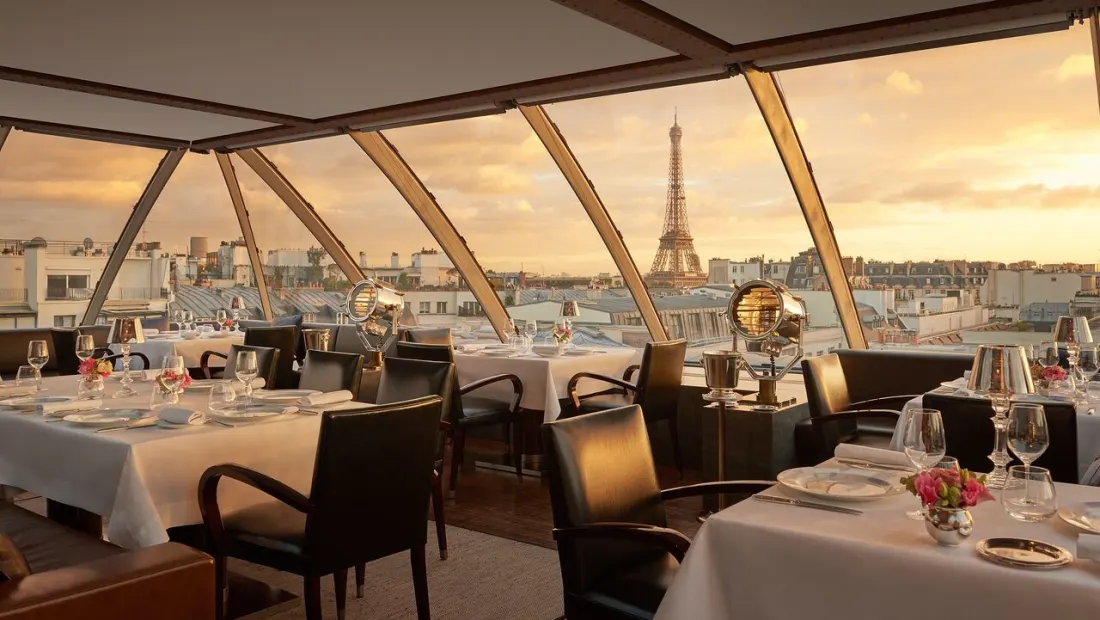
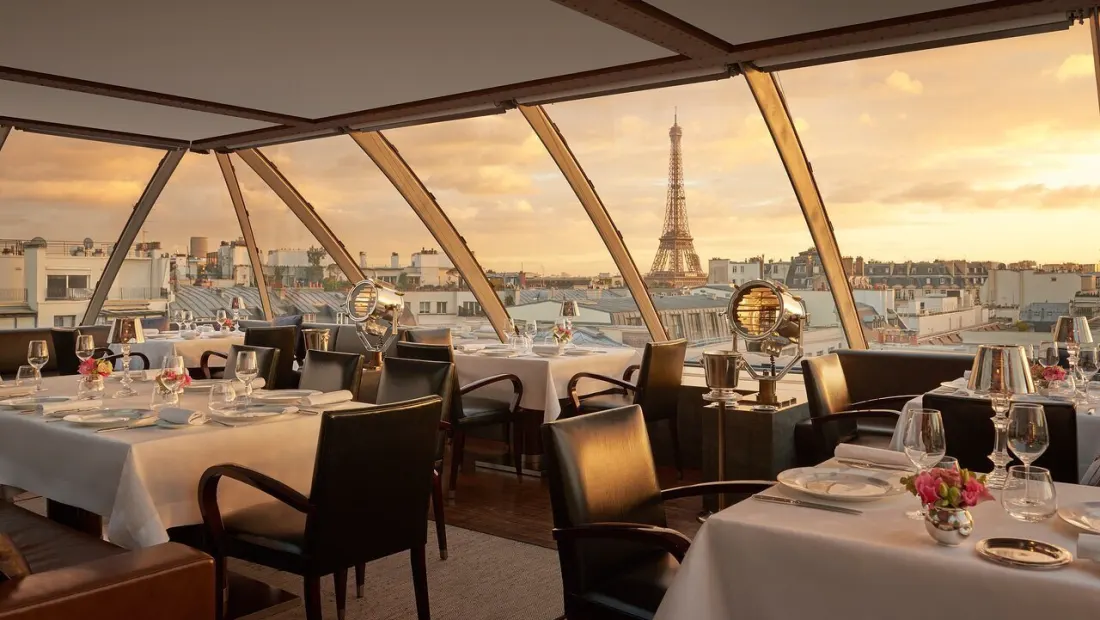
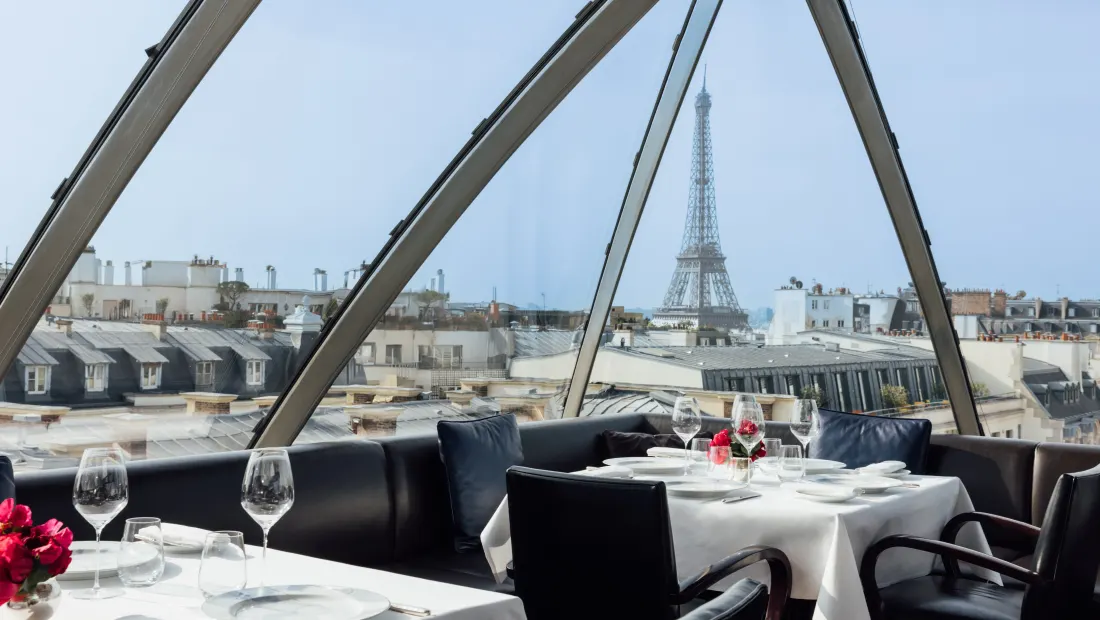
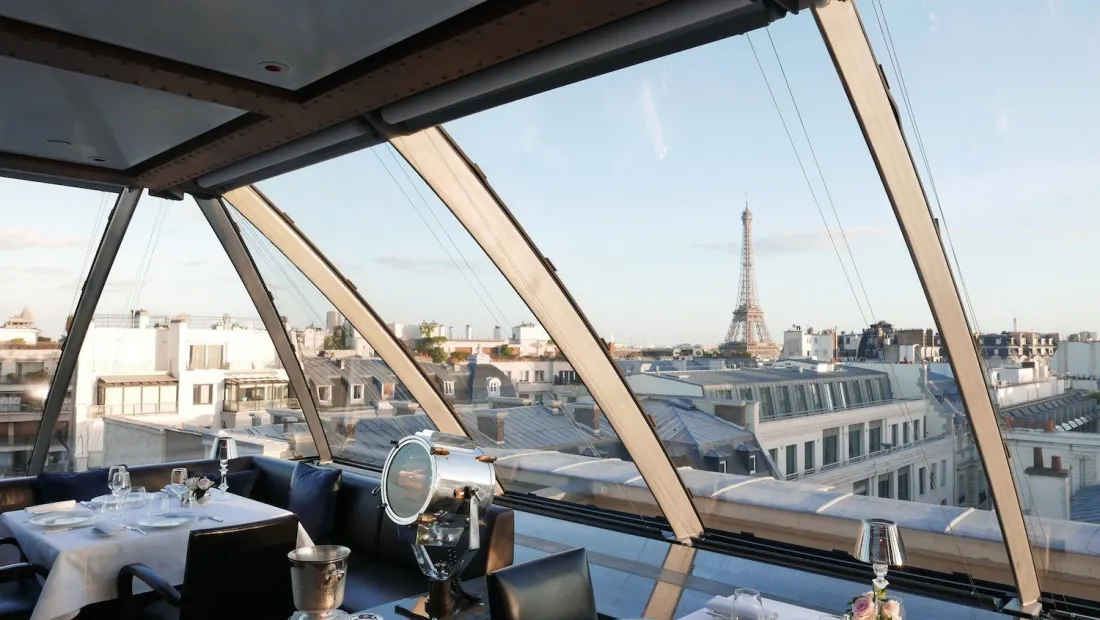
L'Oiseau Blanc Restaurant in Paris occupies a distinctive rooftop position that immediately sets it apart from the city's many fine-dining addresses. The dining room is oriented toward the Eiffel Tower, and the sweeping skyline panorama becomes an integral part of the meal rather than a distant backdrop. Chef David Bizet shapes the kitchen around naturality, regularity, and authenticity, and this philosophy is expressed through two distinct menu formats that give the venue a dual personality: a structured lunch offering and a more expansive evening journey.
The midday experience revolves around "La Table de L'Oiseau Blanc," a menu conceived as a gastronomic stopover. Available in two or three courses, it is designed for guests who want a composed, polished meal without the full arc of a tasting menu. The kitchen draws on exceptional produce, some of which comes directly from the chef's own garden, and the cooking leans toward clarity rather than overworked presentations. At dinner, the rhythm shifts. The evening menu unfolds across six stops, each built around signature dishes that showcase daring flavor combinations. The progression moves through carefully selected products, and the team's intention is to guide diners through a coherent narrative rather than a sequence of disconnected plates.
What Shapes the Experience
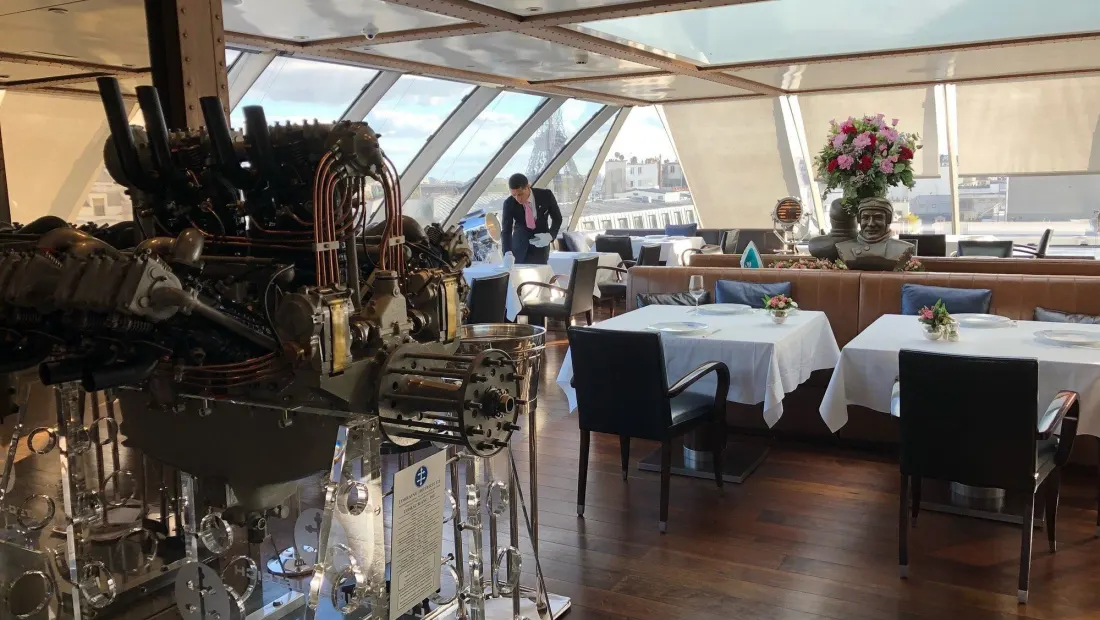
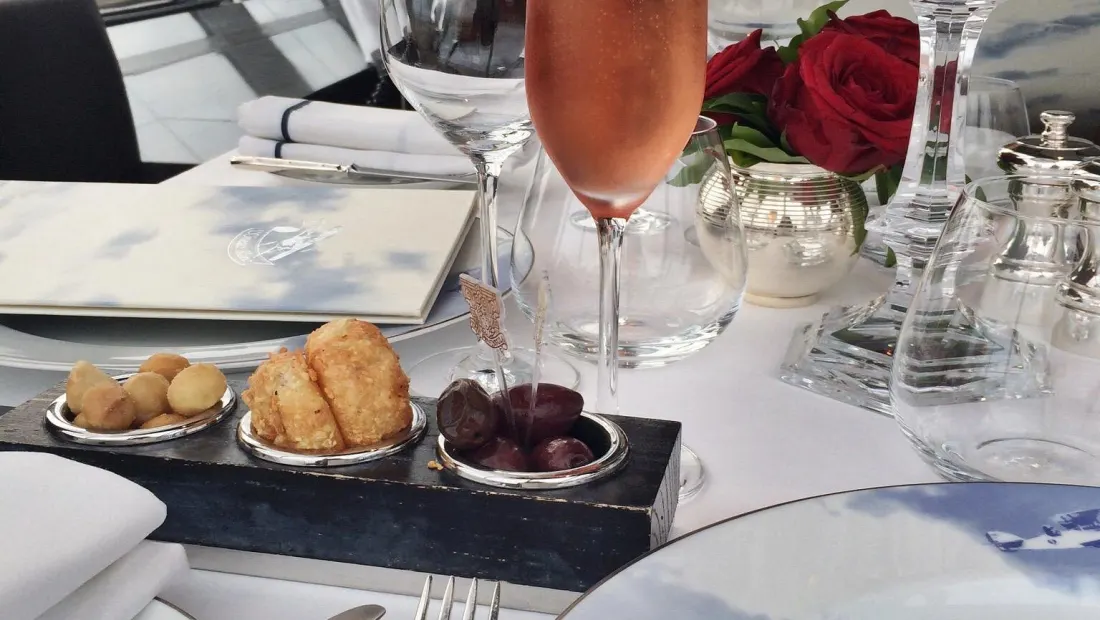
The atmosphere balances formality with a certain lightness that comes from the open sky and the visual connection to the Parisian skyline. Tables are arranged so that the view remains a constant presence, yet the room does not feel like a sightseeing platform. The service team operates with a level of attention that guests frequently note, and the sommelier is often mentioned for providing thoughtful guidance that complements the kitchen's work. The overall rhythm is unhurried, encouraging diners to settle into the progression of courses.
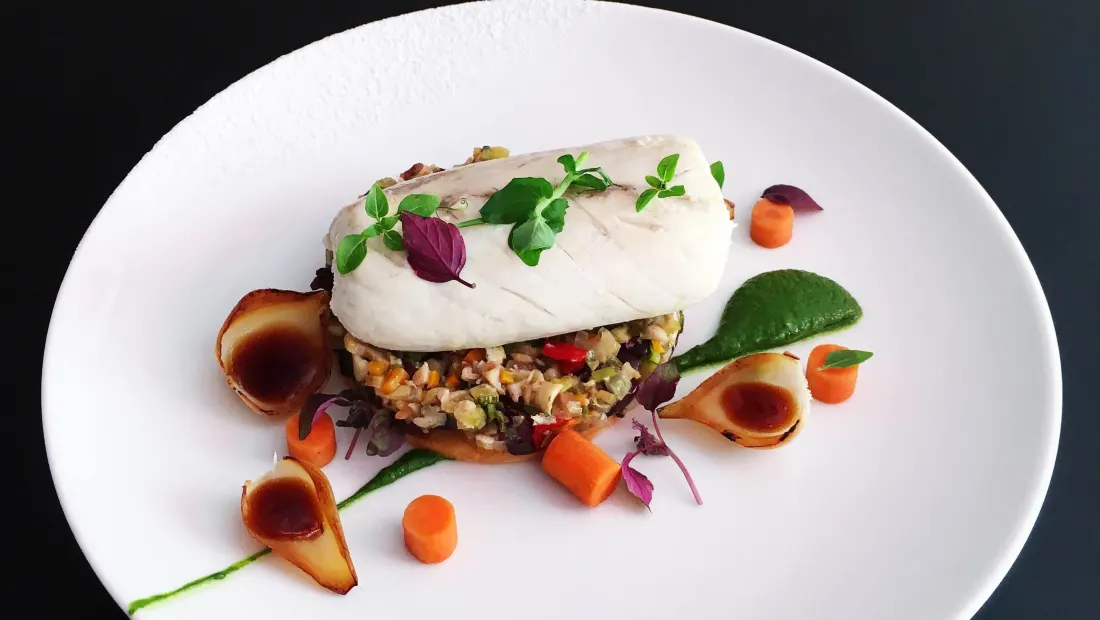
Chef Bizet's approach avoids heavy sauces and overly complex constructions. The produce speaks first, and the combinations are built to heighten rather than mask. Dishes arrive with a sense of precision, and the evening menu in particular reveals the kitchen's ambition to create an emotional response through flavor. The lunch menu, while more concise, carries the same underlying principles and offers a window into the chef's style for those who prefer a shorter sitting.
Guest Impressions
Recurring feedback highlights the quality of the food and the attentiveness of the service as consistent strengths. Many diners describe the setting as magical, and the view is frequently cited as a defining element of the visit. The sommelier's advice receives regular praise for its relevance and lack of pretension. While most reports are strongly positive, there are occasional notes that certain desserts have not resonated as strongly as the savory courses, suggesting that the pastry section can be more polarizing. Isolated negative experiences exist, but they do not reflect the broader pattern of satisfaction that emerges across a large number of reviews.
The restaurant fits naturally into a day that already includes cultural or leisure activities in the western part of central Paris, and its lunch format is particularly suited to visitors who want a refined meal without committing to a lengthy evening. The dinner service, by contrast, rewards those who are prepared to give themselves over to a fuller tasting experience. In both cases, the combination of a carefully managed kitchen, a service team that understands pacing, and a setting that few Paris restaurants can match creates a dining experience that feels considered at every stage.













Add Your Comment
Comments appear on the website after admin approval.